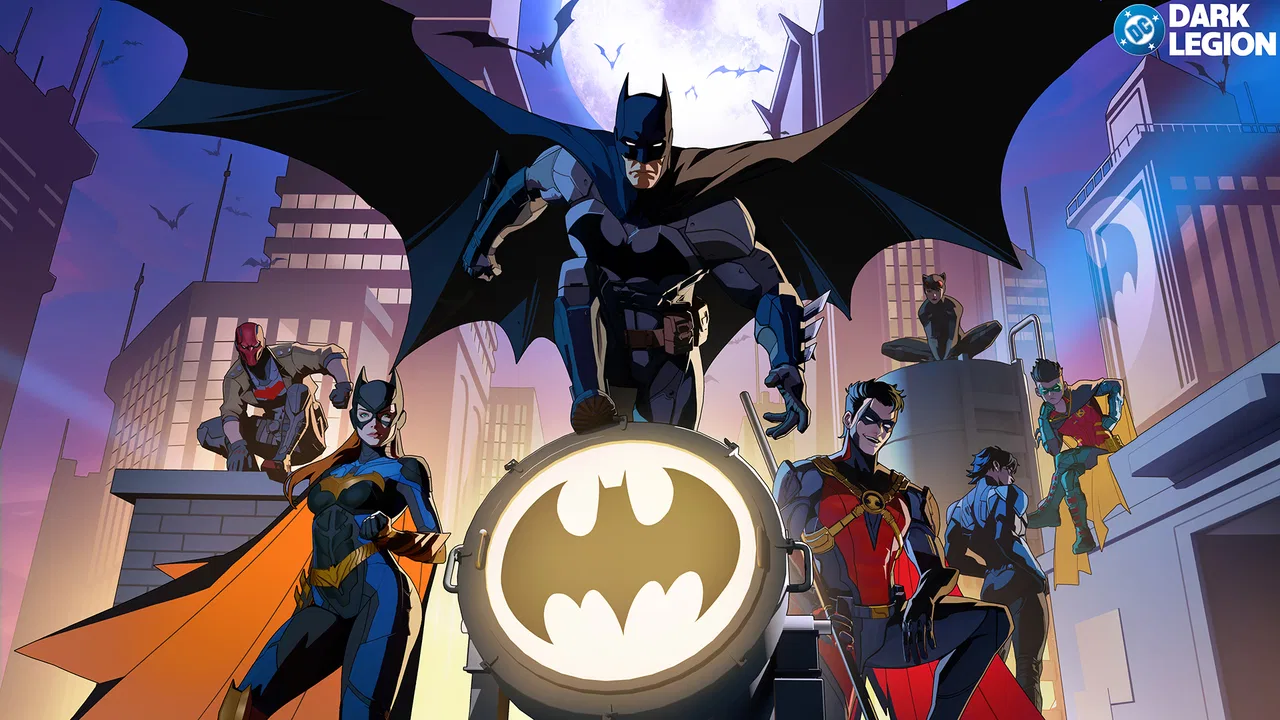
DC: Dark Legion™
- 4.1
- Rating
- 5.00M
- Installs
- Free
- Price

 Analysis by App-foxy
I spent time with DC: Dark Legion™ as a mobile strategy game, and my first impression was that it wants to be more thoughtful than a simple character-collection brawler. The familiar DC setting gets you through the door, but the real question is whether you enjoy building a team, weighing upgrades, and making decisions that pay off over several battles rather than only during one flashy encounter. In my experience, that is where the game is most interesting.
It is free to download, aimed at a Teen audience, and developed by FunPlus International AG. The game has already passed five million installs, with an average rating of 4.0 from around eighty-eight thousand ratings. Those figures suggest a sizeable player base, but they do not remove the need to decide whether its particular style suits you. This is a strategy game first, with DC characters providing the theme and the motivation to keep improving a roster.
I would recommend it most to someone who likes collecting heroes and villains but wants more involvement than simply tapping an automatic battle button. If you prefer a self-contained premium game, a fast arcade match, or a strategy title with no pressure to keep upgrading, you may find the structure less comfortable. The appeal comes from planning over time, not from a single short session.
You May Also Like

 Blood Strike: 2.5 Anniversary
Blood Strike’s Loadouts Turn Every Drop Into a Tactical Gamble
A close look at Blood Strike’s custom loadouts: how fast access to signature weapons reshapes its battle royale rhythm, rewards preparation, and narrows the gap between fights.

 Pandora - Music & Podcasts
Pandora’s Music Is Easy to Start, but Harder to Recover
Pandora’s strength is its low-effort path from a seed to a station. Its weak spot is how much confidence it asks you to place in connection, setup, and quiet recovery.

 8 Ball Pool
 Is Built on Rivalries, Rematches, and Routine
A close look at the rivalries, rematches, shared routines, and unanswered safety questions that turn a quick pool match into a persistent mobile community.

 Samsung Music
’s Quiet Strength Is Playing What You Already Own
Its reach comes less from spectacle than from dependable access to a personal library. That simplicity is both the app’s strongest retention engine and its ceiling.

 AccuWeather: Weather Radar
AccuWeather Review: A Quick, Clear Forecast for Everyday Decisions
For everyday plans, the best forecast is the one you can understand quickly. AccuWeather makes rain timing, radar, and local conditions easy to act on, with a few trade-offs.

 Hill Climb Racing
Why Hill Climb Racing Still Turns Crashes Into One More Run
A tiny car, a bumpy hill and one more upgrade: Hill Climb Racing keeps resurfacing because its simple chaos makes every near-miss feel personal.
More From Our News Desk



Where the important decisions begin
The central decision is not simply which character looks strongest. It is how I want my roster to function as a group. A powerful individual can still be a poor choice if the rest of the team does not support that role, and a less obvious pick can become useful when it completes a more reliable lineup. That makes roster building feel more deliberate than choosing the highest visible power value.
I found it helpful to think in layers. First, I considered what each member contributed. Then I looked at whether the group had enough balance to survive an awkward matchup. Finally, I asked whether spending resources on that team would help me in several situations or only improve one narrow battle. This third question is easy to overlook, especially when a new character creates the temptation to change everything immediately.
The DC theme makes experimentation enjoyable because the roster carries personality. I was more willing to test a different combination when the characters felt distinct in my head, rather than treating them as anonymous icons. Still, the game rewards practical thinking. A favorite character may not belong in every lineup, and using one just because I like the character can create a weakness that becomes obvious against a better-prepared opponent.
That is one of the first useful habits I would suggest: keep a clear purpose for each team. A lineup intended for steady progress should not be rebuilt every time a new option appears. I prefer assigning a main group to dependable advancement, then using spare resources and less familiar characters for testing. This reduces the feeling that every defeat requires a complete restart.
The multiplayer PvP focus also changes how I approach decisions. Against a predictable computer opponent, I can often rely on a familiar routine. Against another player, I have to allow for a different plan, a stronger investment in one role, or a lineup designed to punish my usual approach. Even when I do not know the opponent’s exact intentions, I can prepare by avoiding a team with only one route to victory.
Planning beyond the next battle
Short-term improvement is satisfying, but the more important choice is where to place limited attention. I try not to upgrade every available character evenly. That sounds fair, but it can leave the whole roster mediocre. Concentrating on a workable core usually gives a clearer sense of progress, while keeping a few alternatives ready for situations where the main plan stops working.
There is a trade-off here. A narrow roster can become efficient quickly, but it may struggle when the opponent exposes its weakness. A broad roster offers more flexibility, yet spreading resources too widely can slow the development of the teams I actually use. I think the best middle ground is a strong core with a small number of experimental choices, rather than trying to maintain every character at the same level.
This approach also helps with everyday play. If I only have a few minutes, I can focus on the next useful upgrade or a battle that tests a specific idea. If I have more time, I can compare alternate combinations and consider whether a loss came from poor timing, a weak role balance, or simply an opponent with better development. That makes short sessions feel purposeful instead of random.
When taking a risk makes sense
Progress in a character-collection strategy game naturally creates moments where I must decide whether to play safely or chase a larger payoff. A safe choice strengthens a dependable lineup. A risky choice may open a stronger future option, but it can also leave the current team less prepared. I do not think either approach is always correct; the right choice depends on whether I am trying to stabilize my position or catch up.
When I was still learning the game, I favored consistency. A reliable team taught me more than a constantly changing one because I could identify what went wrong. Once I understood the basic rhythm, experimentation became more valuable. I could change one part of the lineup, observe the result, and decide whether the improvement came from that change or from the opponent being a poor match.
That one-change-at-a-time method is a practical tip that is easy to miss. If I replace several characters and upgrade them all at once, I may win but learn very little. If I alter one role or one key choice, the result is easier to interpret. This is particularly useful for players who want to improve rather than simply collect a higher-looking power total.
The free-to-play structure deserves careful attention. The game is free, but optional purchases range from $0.29 to $99.99 per item. I would not treat every purchase as a problem, yet the presence of a wide price range means I would set a personal spending limit before getting invested in the roster. The most comfortable way to play, in my view, is to regard purchases as optional acceleration rather than as part of the basic admission price.
That distinction matters because strategy loses some of its satisfaction if every setback immediately becomes a reason to spend. I prefer asking whether I made a poor decision, met a bad matchup, or simply need more time. If the answer is that I have not yet learned the system, paying to move forward may skip the part that makes the game rewarding.
Counterplay is more than choosing a stronger team
One of the better aspects of the design is the potential for counterplay. Even without relying on invented formulas or fixed battle rules, the general lesson is clear: a higher-strength roster is not automatically a perfect answer to every situation. The way a team is assembled, the roles it covers, and the weaknesses it leaves exposed all matter.
I try to look for the opponent’s plan rather than reacting only to individual characters. Is the lineup built to overwhelm quickly, survive for a long time, or depend heavily on one important member? Once I identify that intention, I can decide whether to challenge it directly or build a more patient response. This turns PvP from a simple comparison into a reading exercise.
A useful everyday scenario is playing during a commute or a lunch break. I might have enough time for a few decisions but not enough for a long, relaxed session. Instead of changing my whole roster in a hurry, I can review the previous result, note the point where the plan failed, and make one targeted adjustment. That habit saves resources and makes the next session more informative.
The limitation is that strategy can become less satisfying when progression differences overshadow decision-making. If I repeatedly face teams that are simply too developed for my current roster, careful planning may not be enough. That is a normal frustration in competitive collection games, and it is a reason I would not recommend this title to someone who wants every victory to depend mainly on immediate skill.
How the game changes as the roster grows
The first hours are mostly about learning what kind of team I want to build and which characters deserve attention. Later, the challenge shifts toward maintenance. New options are exciting, but they also create pressure to reconsider earlier investments. The deeper question becomes whether a new addition genuinely improves my strategy or merely looks attractive because it is unfamiliar.
I found that depth comes from revisiting old decisions with better information. A character I ignored early may become useful when I understand what my main lineup lacks. Conversely, an early favorite may lose value once opponents learn how to exploit the same predictable approach. This gives the collection system a strategic purpose, provided I am willing to evaluate characters by function rather than popularity.
My advice is to keep notes mentally, or even briefly on paper, about why I selected a character and what problem that character was meant to solve. Without that discipline, it is easy to confuse activity with progress. Constantly rearranging a roster feels busy, but it does not necessarily make the team better. A clear reason for each change makes the long-term path easier to judge.
The current version is 2.1.60, and the game supports devices running Android 7.0 or later. That makes it accessible to a fairly broad range of Android users, although compatibility alone does not tell me how smoothly every device will perform. I would still leave enough storage and close other demanding apps before a longer session, especially when I want to focus on competitive play rather than deal with interruptions.
For iOS players, the same practical question applies: the important issue is not only whether the game installs, but whether the device is comfortable for repeated sessions. A collection-focused strategy game can encourage frequent checking, so battery use, notifications, and available time matter more than they would in a game played once a week. I would treat it as an ongoing hobby rather than a title to finish in a weekend.
Who will enjoy the long-term loop
This is a good fit for DC fans who enjoy making a personal roster instead of following one fixed campaign path. It also suits players who like comparing lineups, improving gradually, and learning from losses. The multiplayer element gives the collection a reason to exist: I am not only gathering characters for a gallery, but preparing them for competition.
It is less suitable for someone who dislikes character upgrading, repeated progression, or the possibility that another player’s development affects the experience. If I want a traditional turn-based strategy game with a clearly defined ending, I would look elsewhere. If I want a competitive game where every match begins on equal terms, a more symmetrical alternative would probably be a better choice.
Compared with a standard collectible role-playing game, this feels more focused on team decisions and PvP preparation than on simply moving through a story. Compared with a pure competitive strategy game, it places more emphasis on building a roster over time. That middle position is both its identity and its main compromise. I get more personalization than in a tightly balanced match-based game, but less certainty that every result reflects only my decisions in the moment.
I also think the game works best for players who can resist urgency. The collection loop naturally encourages the feeling that the next character, upgrade, or improvement will solve everything. In practice, a well-understood team is often more valuable than a constantly expanding one. Waiting, testing, and saving resources can be strategically stronger than reacting to every new possibility.
Small habits that improve the experience
I would begin by choosing a core lineup and giving it enough time to reveal its strengths and weaknesses. I would then keep a secondary group for experiments, not because every character must be developed immediately, but because flexibility becomes valuable when the main team encounters a bad matchup.
I would also separate three kinds of failure: a tactical mistake, a roster weakness, and a progression gap. The first can be corrected through better decisions. The second may require changing a character or role. The third may simply require patience. Treating all three as the same problem leads to wasteful upgrades and unnecessary spending.
Finally, I would judge an upgrade by the number of situations it improves. A choice that helps one narrow matchup can be worthwhile when that matchup is common or especially threatening. Otherwise, I prefer improvements that make the whole team more dependable. This is the kind of long-range thinking that keeps the game strategic after the initial excitement of unlocking characters fades.
My strategy verdict
DC: Dark Legion™ has a clear appeal: it combines a recognizable DC roster with a strategy loop built around collection, improvement, and multiplayer competition. I enjoyed it most when I treated each battle as information rather than as a simple win-or-lose test. The strongest moments came from adjusting a plan, protecting a team’s weaknesses, and seeing a previously overlooked character become useful for a specific reason.
It is not the right choice for everyone. The free-to-play structure, optional purchases, ongoing progression, and uneven competitive matchups may frustrate players who want a fully even playing field or a short, complete experience. I also would not recommend rushing into purchases before learning whether the game’s planning rhythm actually holds my attention.
For me, the deciding factor is whether I want a DC-themed strategy hobby rather than a quick mobile distraction. If I do, the game offers enough room to think about roster roles, risk, adaptation, and long-term investment. If I only want immediate action or a game where skill is isolated from collection progress, another option would serve me better.
With its Teen rating, free entry, broad Android compatibility, and established player community, it is easy to try without committing money at the start. My recommendation is to begin slowly, build around a clear team idea, and resist the urge to upgrade everything at once. The best reason to keep playing is not simply collecting more DC characters, but learning how to make a roster work under pressure.
FAQs for DC: Dark Legion™
01What is the main objective of DC: Dark Legion™?
DC: Dark Legion™ is a strategy-based role-playing game where players assemble a team of iconic DC superheroes and villains to battle against formidable foes. The game focuses on collecting characters, upgrading their skills, and strategically deploying them in various missions to save the universe from impending threats.
02Is DC: Dark Legion™ free to play?
Yes, DC: Dark Legion™ is free to download and play on both Android and iOS platforms. However, it offers in-app purchases for players who wish to enhance their gaming experience by acquiring additional resources, characters, or exclusive items to progress faster in the game.
03What are the system requirements for DC: Dark Legion™?
To ensure optimal performance, DC: Dark Legion™ requires a device running Android 5.0 or higher, or iOS 11.0 or later. It is recommended to have at least 2GB of RAM and a stable internet connection for seamless gameplay and accessing online features such as multiplayer modes and event updates.
04Can I play DC: Dark Legion™ offline?
DC: Dark Legion™ requires an internet connection to enjoy its full range of features. While some aspects of the game might be accessible offline, such as viewing character details, the main gameplay, including missions and multiplayer interactions, mandates an active internet connection.
05How does character progression work in DC: Dark Legion™?
Character progression in DC: Dark Legion™ involves leveling up your heroes and villains by completing missions and earning experience points. Players can also enhance abilities using specific resources and unlock new skills as characters reach higher levels, allowing for more strategic depth and powerful team compositions.
Pros
- Visually stunning graphics enhance gameplay.
- Diverse character roster with unique abilities.
- Engaging storyline keeps players invested.
- Regular updates with new content.
- Smooth controls for a seamless experience.
Cons
- In-app purchases can be costly.
- Requires constant internet connection.
- Large file size consumes storage space.
- Battery drain is significant during play.
- Occasional bugs affect performance.

DC: Dark Legion™
Gallery